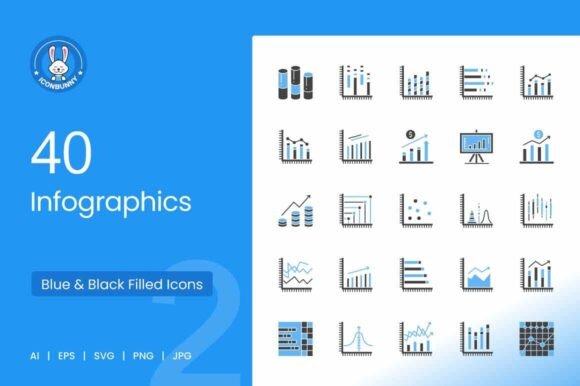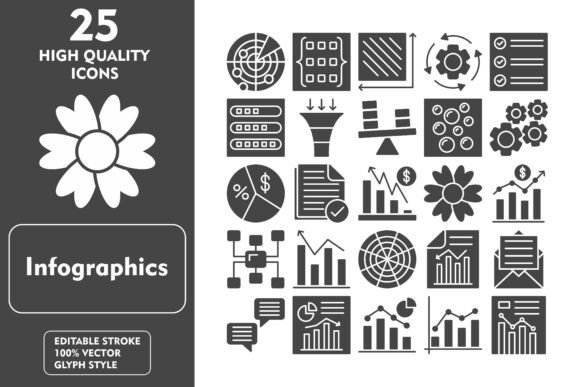
Infographics Glyph Icon Set for Visual Storytelling
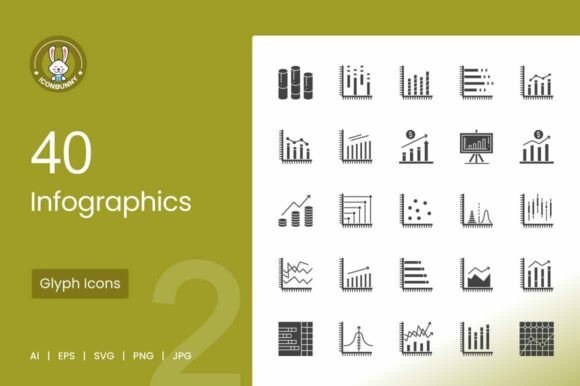
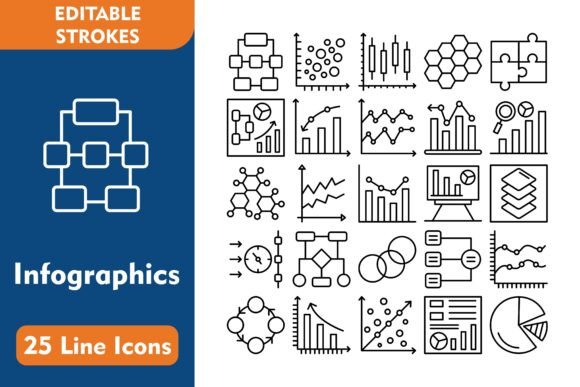
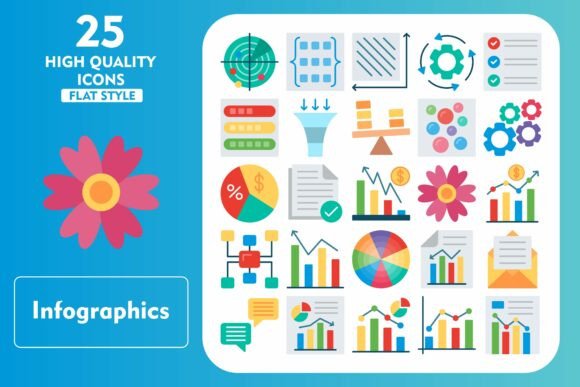
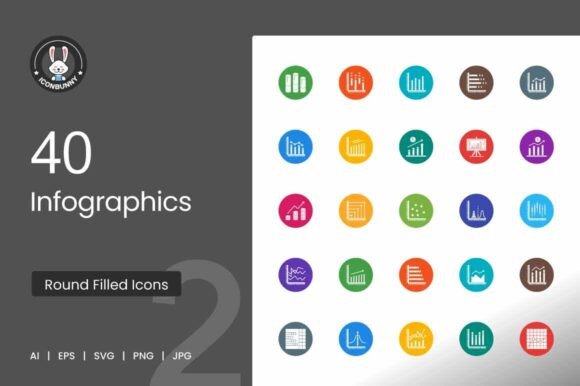
Whether you are designing a slide deck, formatting a blog post, or building a brand identity, the way you present information often determines how well it lands. Infographics Glyph Icon refers to a curated collection of vector symbols designed specifically for creating clear, visually appealing infographics. These icons are not just decorative elements—they are functional building blocks that help you communicate data, processes, comparisons, and hierarchies without relying on heavy text. The set includes one hundred fully resizable vector graphics, delivered as 25 EPS, 25 JPG, and 25 SVG files. Every icon is ready to use immediately, and each shape can be edited or recolored in any vector tool such as Adobe Illustrator.
For many people, the difference between a good infographic and a great one comes down to consistency. A glyph icon set provides that consistency because every symbol shares a similar visual weight, stroke style, and level of detail. This makes it easier to combine multiple icons in a single graphic without visual clutter. The fact that the files are bundled in three common formats also means you are not locked into a specific software or workflow. EPS files work well for print and professional layouts, SVG files are ideal for web and interactive projects, and JPG files offer quick previews or direct use in non-editable contexts.
Why Different Audiences Care About This Icon Set
Not everyone approaches an icon set with the same expectations. A marketing professional might prioritize brand alignment, while a freelancer could focus on speed and flexibility. Understanding how Infographics Glyph Icon serves different roles helps you decide whether it matches your own needs.
Beginners and Hobbyists
If you are new to design or infographic creation, the idea of building visuals from scratch can feel overwhelming. A ready-to-use glyph icon set removes much of that pressure. Because every file is already drawn and styled, you can focus on layout and storytelling rather than learning complex drawing tools. The inclusion of SVG files is especially helpful if you work with web tools like Canva, Figma, or basic HTML editing—SVG scales perfectly at any size, so you never have to worry about pixelation.
A hobbyist making a personal blog infographic about fitness habits, for example, can simply open the SVG file, drag it into a design tool, and adjust colors to match their site theme. The ability to change colors easily means the same set can be reused across different projects without looking repetitive. Beginners often worry about licensing or technical barriers, but a complete package of pre-made, editable files eliminates those concerns from the start.
Marketers and Bloggers
Marketers and content creators frequently produce infographics for social media, email newsletters, and lead generation. For this audience, time is a critical factor. Having 100 vector graphics ready to drop into a design means you can produce a polished visual in minutes rather than hours. The EPS format is particularly useful if you work with Adobe InDesign or Illustrator for branded collateral, since you can open the file, apply your brand color palette, and export at any resolution.
Consider a blogger writing a comparison piece between two software tools. Instead of relying on screenshots or stock photos, they can use glyph icons to represent features like speed, cost, and user interface. This not only makes the article more scannable but also improves reader retention. Because the icons are thematic and cohesive, the final graphic looks professional even if the blogger has limited design experience. The JPG versions also serve as quick placeholders for drafts or client approvals before the final version is polished.
Educators and Trainers
Teachers, course creators, and corporate trainers often need to simplify complex information for learners. A glyph icon set designed for infographics is a natural fit for slide decks, handouts, and online course materials. The resizable nature of vector files means you can enlarge an icon to fill a slide without losing sharpness, or shrink it to fit into a table or diagram.
An educator creating a module on data literacy, for instance, might use icons to represent statistical concepts such as mean, median, mode, and range. Because the icons are editable, they can also add labels or combine multiple symbols into a single composite image. The long-term usefulness here is high: once you build a library of materials using these icons, you can update colors or swap symbols in future semesters without starting from scratch. For trainers who work across different platforms—PowerPoint, Google Slides, or PDF handouts—the availability of both EPS and SVG formats ensures compatibility.
Freelancers and Small Business Owners
Freelancers and entrepreneurs wear many hats, and design is often one of them even if it is not their core skill. A comprehensive icon set saves money by reducing the need to commission custom illustrations for every project. The 100 icons cover a broad range of topics, so you are likely to find relevant symbols for common business themes like growth, communication, technology, and finance.
A small business owner preparing a pitch deck for investors can use the icons to create a clean, visual flow. For example, a slide about market expansion might include icons for location, revenue, and target audience. Because the shapes are easy to edit in any vector tool, you can also adjust stroke weights or add fills to match your brand guidelines. Freelancers who take on varied projects—from social media graphics to printed brochures—appreciate that the same set scales across different media without degrading. The one-time investment in a versatile icon pack often pays for itself after just a few client deliverables.
Practical Priorities: What to Consider When Evaluating the Set
Different people weigh factors like ease of use, cost, flexibility, and presentation quality differently. Here is how those priorities might apply to Infographics Glyph Icon in real-world scenarios.
Ease of Use and Learning Curve
For users who are not proficient in vector editing software, the SVG and JPG formats offer the lowest barrier to entry. SVG files can be opened in a web browser, dragged into free tools like Inkscape or Vectr, and edited with basic color changes. JPG files require no editing skills at all—they are ready to insert directly into documents, slides, or web pages. If you are comfortable with Adobe Illustrator, the EPS files give you full control over every anchor point, stroke, and fill. Beginners can start with JPG or SVG and gradually learn to edit the EPS files as their skills grow.
Flexibility and Customization
One of the strongest selling points of a glyph icon set is that you can change colors and shapes without degrading quality. Because the icons are vector based, you can scale them from a tiny app icon to a large poster without any loss of resolution. This flexibility matters if you work across multiple channels. A social media manager might use a blue version of an icon on LinkedIn and a warmer tone on Instagram, both derived from the same original file. An event organizer could take an icon representing a venue and turn it into a full-page graphic for a printed program. The ability to edit shapes also allows you to combine icons to create new symbols that are not in the original set.
Commercial Value and Long-Term Usefulness
For professionals who produce a high volume of content, time saved directly translates to revenue. Having 100 pre-made, editable icons means you can spend your energy on strategy and messaging rather than on drawing. The fact that the package includes 25 distinct icon sets (each in EPS, JPG, and SVG) suggests breadth of coverage. Over the course of a year, you might use different icons for different campaigns, reusing and recoloring as trends change. Because vector files do not expire or become obsolete with software updates, the set retains its value long after purchase.
Matching the Icon Set to Your Specific Project Type
Not every project calls for the same kind of iconography. Here is how to evaluate whether this particular collection fits what you are building.
- Data-heavy reports or whitepapers: Glyph icons work well alongside charts and graphs because they add visual breathing room. Use them to label categories or highlight key takeaways without distracting from the data itself.
- Website or app interfaces: SVG format is ideal for responsive design. Icons will render crisply on retina screens and can be styled with CSS for hover states or dark mode.
- Print materials such as flyers or brochures: EPS files give print designers the precision they need for high-resolution output. You can also convert them to CMYK color space if required by your printer.
- Social media posts and stories: JPG versions are ready to upload immediately. For platforms that support transparent backgrounds, SVG or EPS can be exported to PNG with transparency preserved.
- Educational handouts or slide decks: The resizable nature means you can build a consistent visual language across all your materials, from a single slide to a full curriculum.
Is This Icon Set Right for You?
The answer depends on your workflow, your comfort with editing tools, and the volume of visual content you produce. If you value speed and want graphics that work immediately without a steep learning curve, the JPG and SVG files give you that. If you need full creative control and plan to build a long-term library of branded visuals, the editable EPS files provide that depth. The combined format package means you are not forced to choose one workflow over another—you can use each format for its best purpose.
Beginners will find the set forgiving and educational, since experimenting with color and scale is easy. Experienced designers can treat the icons as a foundation, modifying them extensively to suit specific briefs. Entrepreneurs and freelancers benefit from the commercial efficiency, while educators and bloggers gain a consistent visual language that learners and readers find easier to follow.
Ultimately, a good icon set does not just decorate your work—it clarifies your message. When you have the right symbol at the right size and in the right format, your audience spends less time deciphering and more time understanding. That clarity is what makes Infographics Glyph Icon a practical choice for anyone who communicates visually, regardless of their background or skill level.