Hemp vs Marijuana Infographics: A Visual Framework for Understanding Cannabis Distinction
The global conversation around cannabis has evolved faster than most industries can keep up. As legal markets expand and consumer interest deepens, one of the most persistent points of confusion remains the distinction between hemp and marijuana. This is where Hemp Vs Marijuana Infographics have become an essential tool for professionals, marketers, creators, and entrepreneurs. These visual assets not only clarify the botanical and legal differences but also serve as a bridge between complex science and everyday understanding. In a landscape where misinformation can derail brands and mislead consumers, clear visual communication is no longer optional—it is a strategic necessity.
The Foundational Difference: What Defines Hemp and Marijuana
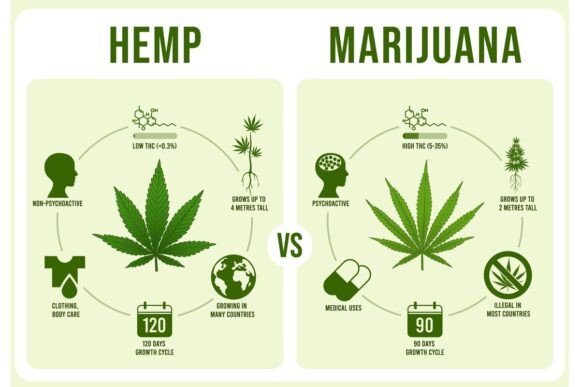
At the biological level, both hemp and marijuana belong to the species Cannabis sativa L., but they diverge sharply in chemical composition and legal classification. The key differentiator is tetrahydrocannabinol (THC) content—the psychoactive compound that produces a "high." In the United States, the 2018 Farm Bill legally defined hemp as any cannabis plant containing no more than 0.3% THC on a dry weight basis. Anything above that threshold is considered marijuana, which remains federally illegal but is legal in several states under varying regulations.
Hemp Vs Marijuana Infographics visually capture this threshold in a way that text alone cannot. A well-designed infographic might show a horizontal bar with a clear 0.3% cutoff, illustrating how hemp contains only trace amounts of THC while marijuana can range from 5% to over 30%. These visuals also highlight other morphological differences: hemp plants are typically tall, slender, and densely packed with fibrous stalks, while marijuana plants are shorter, bushier, and cultivated for resin-rich flowers. By presenting these distinctions side by side, infographics transform an abstract legal nuance into an immediately understandable reference.
For professionals entering the cannabis space—whether as growers, product developers, or consultants—understanding this distinction is foundational. It affects everything from business licensing and supply chain logistics to product labeling and marketing claims. A simple infographic can serve as a compliance reference, training tool, or consumer education piece, reducing the risk of costly misunderstandings.
Why Infographics Have Become Essential in Cannabis Marketing and Business Strategy
The cannabis industry operates under a paradox: it is simultaneously one of the most regulated and most dynamic sectors in modern commerce. Consumers are eager to learn, but they are also skeptical of brands that oversimplify or misrepresent plant biology. This is where Hemp Vs Marijuana Infographics prove their value. They allow brands to demonstrate expertise, build trust, and comply with advertising restrictions that often prohibit making health claims or using certain imagery.
Consider a CBD company selling products derived from hemp. Its customers frequently ask: "Will this get me high?" A clear infographic explaining the 0.3% THC threshold and the non-psychoactive nature of hemp-derived CBD can answer that question in seconds, without sounding defensive or technical. Similarly, a marijuana dispensary might use an infographic to explain why different strains have varying effects, tying visual cues about plant structure to cannabinoid profiles.
Entrepreneurs and marketers are using these visuals in multiple channels:
- Product labels and packaging inserts – Quick-reference guides that demystify lab results and THC levels.
- Website educational pages – Infographics that reduce bounce rates by answering common questions at a glance.
- Social media carousels – Shareable assets that cut through algorithm noise with high-contrast, scannable information.
- Sales presentations and investor decks – Visual summaries that communicate regulatory clarity and market positioning.
One practical example: a hemp fiber company targeting industrial buyers used an infographic comparing the lifecycle of hemp cultivation versus marijuana cultivation. The graphic emphasized height, spacing, harvest timing, and fiber yield, positioning hemp as a sustainable industrial crop rather than a recreational substance. This helped the company secure contracts with textile manufacturers who had previously been wary of cannabis-related stigma.
Changing Workflows and Expectations for Content Creators and Freelancers
The demand for Hemp Vs Marijuana Infographics reflects a broader shift in how professionals approach content creation. Designers, illustrators, and freelance marketers are increasingly being asked to produce visual assets that are both scientifically accurate and aesthetically engaging. This requires more than just artistic skill—it demands a working understanding of cannabis botany, chemistry, and regulation.
Freelancers who specialize in this niche report that clients want infographics that do more than list bullet points. They want narratives that guide the viewer from confusion to clarity. For example, a common request is an infographic that starts with a generic "cannabis leaf" icon, then splits into two branches labeled "Hemp" and "Marijuana," each leading to distinct applications, legality, and consumer experiences. This kind of Cannabis and Hemp vs Marijuana infographic format works because it mirrors the way people naturally categorize information.
Content creators are also adapting to platform-specific constraints. An infographic designed for a website might include detailed footnotes and source citations, while the same concept reformatted for Instagram trades text depth for bold icons and color-coded zones. The best designers build modular infographic systems—core visual elements like a THC scale bar, a plant morphology comparison, or a legal vs. illegal designation—that can be reused across campaigns.
As the industry matures, clients are becoming more sophisticated in their requests. They want infographics that align with brand guidelines, comply with state-specific regulations (such as California's Proposition 65 warnings), and anticipate future legal changes. This is pushing creators to stay current with legislative updates and to design visuals that can be easily updated without a complete redesign.
Broader Consumer Trends and the Role of Visual Education
Consumer expectations around transparency and education are reshaping the cannabis market. According to recent surveys, a majority of cannabis consumers—both medical and recreational—say that lab testing and clear product information are top factors in purchasing decisions. Yet the same studies show that many consumers cannot correctly define the difference between hemp and marijuana. This gap creates both a challenge and an opportunity for brands.
Hemp Vs Marijuana Infographics address this gap directly. They empower consumers to make informed choices, which in turn reduces returns, complaints, and negative reviews. A dispensary that places a large, wall-mounted infographic near the point of sale is not just decorating—it is providing a customer service tool that staff can point to when explaining why one product is legal over the counter while another requires a medical card.
On a larger scale, these infographics contribute to the normalization and de-stigmatization of cannabis. When people see a clear, non-sensationalized visual comparing a tall hemp stalk with a bushy marijuana plant, it becomes easier to appreciate cannabis as a diverse genus with agricultural, medical, and industrial applications. This is particularly important in regions where legalization is still being debated. Policymakers, journalists, and community leaders often rely on simplified visual aids to understand the issues. A well-crafted infographic can influence public discourse more effectively than a thousand words of policy text.
The wellness and natural products trend also plays a role. As hemp-derived CBD, fiber, and seed products enter mainstream retail—from grocery stores to pharmacies—retailers need in-store signage that explains why these products contain only trace THC. An infographic positioned next to a display of hemp seed oil can reassure shoppers that they are buying a nutritional ingredient, not a psychoactive substance.
Practical Examples of Effective Hemp vs Marijuana Infographics
To illustrate what makes these infographics work, consider a few real-world examples that have circulated in professional and trade contexts:
- The "THC Spectrum" infographic – A horizontal gradient bar running from 0% to 30% THC, with the 0.3% line marked clearly. Below the bar, icons represent different product types: fiber, seed, and CBD extract on the hemp side; flower, concentrate, and edibles on the marijuana side. This graphic makes the legal boundary instantly visible.
- The "Botanical Comparison" poster – Side-by-side illustrations of two cannabis plants with labeled callouts. Hemp features words like "tall," "narrow leaves," "long internodes," and "high CBD potential." Marijuana features "compact," "broad leaves," "short internodes," and "high THC potential." This format is popular in agricultural extension materials and grower training.
- The "Legal Landscape" map infographic – A stylized map showing states or countries color-coded by hemp legality, medical marijuana legality, and adult-use marijuana legality. A companion diagram explains the 0.3% THC rule and how it interacts with federal vs. state law. This is often used by lawyers, consultants, and market analysts.
These examples share common design principles: high contrast, clear hierarchy, minimal text, and a logical flow from general to specific. They avoid decorative overload and focus instead on data accuracy. The most effective Hemp Vs Marijuana Infographics treat the viewer as an intelligent learner, not as a passive consumer of marketing fluff.
Connecting Infographic Use to Larger Industry Developments
The rise of Hemp Vs Marijuana Infographics is not an isolated trend. It parallels broader movements toward visual literacy, data democratization, and regulatory transparency. As artificial intelligence tools make it easier to generate graphics from structured data, the bottleneck is shifting from production to strategy: knowing which distinctions to highlight and how to frame them for specific audiences.
In the pharmaceutical and nutraceutical sectors, for example, infographics are increasingly used to explain clinical trial results and dosing guidelines. Cannabis companies that adopt similar rigor in their visual communications set themselves apart from unsubstantiated hype. This builds credibility with healthcare professionals, insurers, and institutional buyers.
Furthermore, as international markets harmonize—or fail to harmonize—their cannabis definitions, infographics will serve as portable reference tools. A European hemp farmer exporting CBD isolate to the United States needs to understand both EU and US THC limits. An infographic that juxtaposes these thresholds helps bridge regulatory systems and reduces the risk of customs holds or legal penalties.
Environmental sustainability is another development where infographics add value. Hemp is often promoted as a eco-friendly crop that requires few pesticides and improves soil health. Marijuana cultivation, especially indoors, has a higher energy and water footprint. An infographic comparing these environmental impacts—using icons for water drops, CO₂ emissions, and biodiversity—can help consumers choose products aligned with their values. This is a growing priority for Gen Z and millennial buyers, who frequently research a brand's sustainability practices before purchasing.
Conclusion: Visual Clarity as a Market Advantage
In a crowded and rapidly evolving industry, the ability to communicate complex information clearly is a competitive edge. Hemp Vs Marijuana Infographics are more than decorative elements—they are strategic assets that educate consumers, build trust, facilitate compliance, and support brand differentiation. Whether you are a startup founder drafting your first pitch deck, a freelance designer looking to specialize in cannabis content, or a marketing director planning a product launch, investing in high-quality visual distinction tools pays dividends.
The legal and botanical line between hemp and marijuana may be thin, but the implications for business and culture are vast. Infographics help everyone—from growers to end users—navigate that line with confidence. As the cannabis industry continues to mature, the brands and professionals who prioritize clear, accurate, and insightful visual communication will be the ones who lead the conversation.