Flat Game Rewards and Treasure Assets: A Versatile Toolkit for Game and App Design
In the world of game design and digital creation, visual rewards play a central role in motivating players and enhancing user experience. Few design packs capture this spirit as effectively as the Flat Game Rewards and Treasure Assets collection. Designed with a clean, vibrant flat aesthetic, this set provides creators with a ready-made library of symbols that represent achievement, progress, and celebration. Whether you are building a mobile puzzle game, a role-playing adventure, or a gamified learning platform, these assets can bring energy and clarity to your interface.
This article explores what makes this pack stand out, how it can be applied across different projects, and what practical considerations to keep in mind when integrating it into your workflow. By the end, you will have a clear understanding of whether this toolkit aligns with your creative goals.
What Does the Flat Game Rewards and Treasure Assets Set Include?
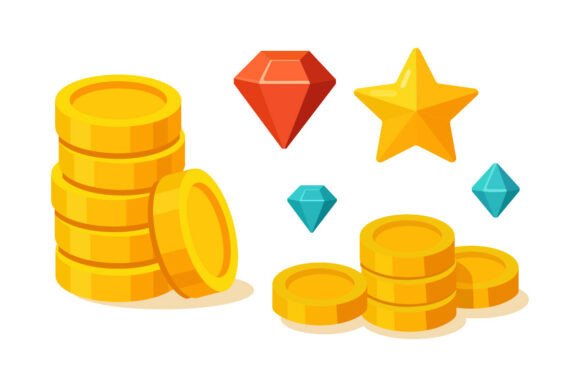
At its core, this collection is built around the idea of celebrating every victory in style with this Colorful Flat Game Rewards and Treasure Assets Set. The pack includes a wide range of items that are universally recognized as symbols of success: gold coins, treasure chests, sparkling gems, trophies, medals, stars, and elegant scrolls that can be used for ranking systems or story progression. Each element follows a consistent flat design language, relying on clean shapes and bright colors rather than textures or gradients. This approach ensures that the assets remain visually harmonious whether placed on a dark background, a bright interface, or mixed with other flat-style components.
The real value here is not just the quantity of assets, but the thoughtfulness behind their design. The color palette is intentionally cheerful and energetic, with warm golds, rich purples, vibrant blues, and glowing yellows. These colors naturally evoke feelings of excitement and accomplishment, which is exactly the emotional response you want when a player unlocks a reward or reaches a milestone. The scrolls, for instance, can double as rank indicators or narrative unlocks, while the gems and coins can serve as currency indicators or collectible items within a game world.
Who Can Benefit from This Design Pack?
One of the most appealing aspects of the Flat Game Rewards and Treasure Assets is its broad appeal across different creative roles. Game developers, especially those working on indie projects or mobile titles, will find these assets immediately useful for populating reward screens, achievement badges, bonus menus, and inventory systems. Because the set is fully editable, developers can quickly adjust colors or sizes without starting from scratch, saving considerable time during production.
UI and UX designers working on gamified applications — such as fitness trackers, language learning apps, or productivity tools — can also leverage these visuals. The flat style integrates seamlessly into modern user interfaces, and the symbols themselves tap into universal motivational psychology. A small star icon next to a completed task or a treasure chest animation after finishing a level adds a layer of emotional reward that keeps users engaged.
Illustrators and graphic designers may find the pack useful as a foundation for custom work. Since each item is designed to be easily customizable, you can repurpose the shapes, change the color schemes, or combine elements to create entirely new icons or badges. This flexibility makes the set a practical addition to any digital creator's toolkit, not just for games but for infographics, educational materials, digital certificates, and even social media graphics.
Key Strengths of the Flat Game Rewards and Treasure Assets
Several characteristics make this design pack stand out in a crowded market of asset collections. First and foremost is the consistency of the flat style. Every element shares a similar visual weight, line structure, and color treatment. This means you can mix and match items freely without worrying about clashing aesthetics. For example, placing a trophy next to a medal and a star creates a cohesive badge system, while combining a treasure chest with gems and coins forms a natural set of rewards.
Another critical strength is ease of customization. Each asset is fully editable, often provided in vector formats (such as SVG or AI) as well as PNG sprites. This allows you to adjust colors, resize elements without losing quality, and even modify shapes to fit your specific branding or game world. If your game uses a dark fantasy setting, you can recolor the gold coins to bronze or silver tones. If you need smaller icons for a mobile interface, scaling them down is trivial. This level of control is a significant time-saver.
The bright and engaging color palette is another deliberate choice. Rather than using muted or realistic tones, the pack employs vivid colors that grab attention. In a game, these visual cues help players quickly identify valuable items or important achievements. In a learning app, they serve as clear markers of progress. The emotional impact of color is well-studied, and this collection uses it to reinforce feelings of reward and success.
Finally, the versatility of use cases is worth highlighting. While the name suggests a focus on games, these assets are equally at home in educational projects, digital certificate templates, motivational infographics, and gamified e-learning platforms. The icons can be used as visual progress indicators, reward milestones, or simply as decorative elements that add a sense of playfulness to an interface.
Practical Considerations and Limitations
No design pack is perfect for every situation, and it is important to evaluate the Flat Game Rewards and Treasure Assets with a clear understanding of its scope. One consideration is that the flat style, while clean and modern, may not fit all visual directions. If your project uses a highly realistic, 3D-rendered, or hand-drawn aesthetic, these flat icons could clash with the overall look. In such cases, you might need to repurpose the shapes as a base for more detailed illustrations or use them only in UI elements that are intentionally flat, like buttons or banners.
Another limitation is the specific thematic focus on treasure, achievement, and rewards. This is excellent for games and apps that involve progression, but if your project requires a broader range of icons — such as weapons, characters, or environmental objects — you would need to supplement this pack with other assets. The collection is specialized, which is both a strength and a constraint depending on your needs.
Additionally, while the assets are easy to customize, doing so effectively does require some familiarity with vector editing software like Adobe Illustrator, Figma, or Inkscape. For complete beginners, there may be a small learning curve when adjusting colors or shapes. However, most designers and developers will find the process straightforward, and many asset packs include documentation or templates to speed up the workflow.
File format compatibility is another practical point. Most modern design tools handle SVG, PNG, and AI files well, but if you are working in a game engine like Unity or Unreal, you may need to import assets as sprites or textures. Always verify that your workflow supports the file types provided. This is not typically a problem, but it is worth checking before purchase.
Real-World Applications and Scenarios
To understand the practical value of these assets, consider a few realistic scenarios. Imagine you are developing a casual mobile puzzle game where players complete levels to earn stars and coins. With this pack, you can quickly create a reward screen that displays a treasure chest opening, coins spilling out, and a star rating for the level. The consistent design ensures the screen looks professional without requiring hours of custom illustration work.
In a role-playing game, you might use the scrolls as quest items, the gems as collectible resources, and the trophies as end-of-dungeon rewards. The ability to recolor the gems to match different elemental types — red for fire, blue for water, green for nature — adds depth to your game world while maintaining visual coherence. Players will immediately recognize these items as valuable without needing extensive tutorial text.
For a gamified educational platform, the medals and stars can be used as achievement badges for completing lessons or quizzes. A progress bar that fills with coins, or a trophy icon that appears when a student masters a topic, adds a motivational layer that encourages continued learning. The cheerful colors are especially appropriate for children's educational apps, where visual appeal directly impacts engagement.
Another interesting use case is in corporate training software or fitness apps. Rewarding users with a digital medal after completing a module, or with a gem for hitting a step goal, makes the experience feel more game-like and satisfying. These small visual cues can significantly improve user retention over time.
Evaluating Suitability for Your Project
Before incorporating the Flat Game Rewards and Treasure Assets into your workflow, take a moment to evaluate how well they align with your project's goals. Start by considering the visual style of your existing interface. If you are already using flat icons, bright colors, and clean lines, this pack will integrate almost seamlessly. If your design leans toward realism, skeuomorphism, or minimalism with subdued tones, you will need to assess whether the assets can be adapted or if they would feel out of place.
Next, think about the emotional tone you want to convey. These assets are inherently celebratory and joyful. If your game or app is designed to be serious, somber, or suspenseful, the bright colors and playful shapes might conflict with the mood. However, even in darker-themed games, reward screens often benefit from a contrast in tone — a moment of brightness after a challenging level can be very effective.
Consider also the level of customization you need. If your project requires a highly unique visual identity, you may want to use these assets as a starting point and modify them heavily. Their simple shapes and vector formats make this easy, but if you lack the time or skills to customize, you might prefer a pack that matches your vision out of the box.
Finally, evaluate scalability and performance. Flat vector assets are lightweight and scale perfectly to any resolution, which is ideal for mobile games and high-DPI screens. If your project runs in a web browser or a low-resource environment, these assets will not slow down performance. They are also easy to animate, whether for pop-up effects, particle systems, or simple hover states in a UI.
Final Thoughts
The Flat Game Rewards and Treasure Assets offers a practical, visually appealing solution for anyone looking to enhance their project with symbols of achievement and progress. Its clean flat design, bright color palette, and easy customization make it a versatile addition to any creator's library. While it is not a universal solution for every visual need, its focused purpose — celebrating every victory in style — is executed with professionalism and care.
Whether you are a solo indie developer building your first game, a designer crafting a gamified learning experience, or a creative professional seeking reliable icons for a client project, this set can save you time while delivering results that look polished and intentional. The key is to understand what it offers, where it fits, and how to adapt it to your unique context. With that understanding, you can make the most of what this colorful and energetic collection has to offer.