Choosing the Right Annual Report Google Slides Template for Professional Presentations
Presenting an annual report is one of the most important tasks many professionals face each year. Whether you are a startup founder updating investors, a nonprofit director sharing impact with donors, or a corporate communications manager reporting to stakeholders, the format and design of your presentation can significantly influence how your message is received. The Annual Report Google Slides Template has emerged as a popular option for those who want a polished, contemporary look without the complexity of dedicated design software. But is it the right choice for every situation? Understanding what this template offers, how it compares with other presentation approaches, and where its strengths and limitations lie can help you make a more informed decision.
What the Annual Report Google Slides Template Offers
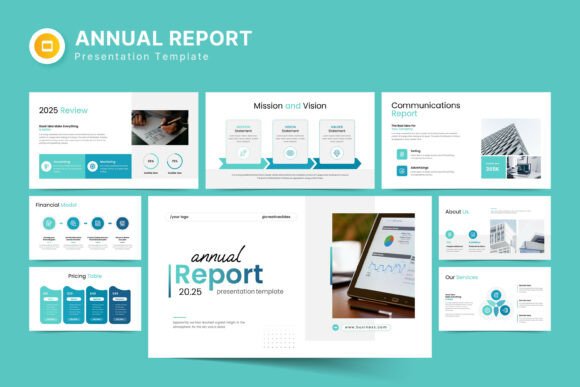
At its core, this template is a pre-designed presentation file built for Google Slides, optimized for the 16:9 Full HD ratio of 1920x1080 pixels. It includes 27 slides with master slide layouts, creative photo layouts, infographics, tables, vector icons, and diagrams. The design philosophy emphasizes simplicity combined with enough visual structure to give your work a professional edge. One of the most practical features is the drag-and-drop functionality for images, which means you do not need advanced design skills to replace placeholder visuals with your own. The color scheme is easy to change, and the template works on both Apple and Windows operating systems because it runs entirely within the browser-based Google Slides environment.
For users who value efficiency, the inclusion of master slides is particularly useful. Master slides allow you to make global changes to fonts, colors, or background elements across all slides simultaneously, saving considerable time when you need to align the presentation with brand guidelines. The template also uses free fonts, and the help file includes links to download them if needed. This reduces the friction of setting up the presentation from scratch.
How It Compares with Alternative Presentation Approaches
When evaluating the Annual Report Google Slides Template, it helps to consider the broader landscape of presentation tools and formats. Many professionals default to building annual reports directly in PowerPoint, Keynote, or even Canva. Others may opt for a completely custom design created by a graphic designer. Each approach carries distinct tradeoffs.
Compared to starting with a blank Google Slides presentation, this template provides a significant head start. A blank canvas forces you to make every design decision from scratch, which can be time-consuming and may lead to inconsistent layouts if you lack design experience. The template imposes a coherent visual structure, which can elevate the overall quality of your report even if you are not a designer. However, that structure also means you are working within someone else's framework. If your content requires a highly unconventional layout or a very specific branded aesthetic that deviates from the template's style, you may find yourself fighting against the pre-built slides rather than being helped by them.
When compared with premium presentation software like Adobe InDesign or professional presentation tools like Prezi, the Google Slides template occupies a middle ground. InDesign offers unparalleled control over typography, layout, and print-quality output, but it has a steep learning curve and is not ideal for screen-based presentations. Prezi offers dynamic zooming and motion effects that can be engaging, but it can also feel disorienting for audiences expecting a linear annual report narrative. The Google Slides template, by contrast, offers a familiar linear slide format with built-in visual variety through infographics and diagrams, without requiring specialized software skills.
Strengths and Practical Advantages
One of the strongest arguments for using the Annual Report Google Slides Template is accessibility. Google Slides is free to use with a Google account, and collaboration features allow multiple team members to edit the same file simultaneously. This is especially valuable for annual reports, which often require input from finance, marketing, leadership, and other departments. The template's compatibility with both Apple and Windows systems ensures that no one is locked out due to platform restrictions.
The 27-slide count is another practical strength. Annual reports typically need to cover company overview, financial highlights, operational achievements, future strategy, and sometimes a letter from the CEO. A 27-slide structure gives you enough room to cover these sections without feeling rushed, while also preventing the presentation from becoming overly long. The inclusion of infographics and diagrams is particularly useful for financial data. Numbers alone can be dry; visualizing revenue growth, market share, or expenses through charts and icons helps audiences grasp key takeaways quickly.
The drag-and-drop image replacement feature also reduces the technical barrier. You do not need to crop, resize, or mask images manually in most cases. The template already has placeholders designed to accept your visuals, which saves time and reduces the risk of distorted images or awkward cropping.
Tradeoffs and Limitations to Consider
No template is without tradeoffs, and understanding these can help you decide whether this option fits your specific needs. The most notable limitation is that the images used in the demo are not included with the template. You will need to source your own photographs, illustrations, or stock images. For organizations with a strong in-house image library, this is a minor inconvenience. For those starting from scratch, it adds an extra step and potentially additional cost if you choose to license stock photos.
Another consideration is the degree of customization. While the template allows for easy color changes and font substitutions, the overall layout structure is fixed to some extent. If your annual report requires a very distinct visual identity that does not align with the template's design language, you may find yourself spending significant effort undoing or reworking elements. In such cases, a fully custom design might be more efficient despite the higher upfront cost.
File format is another factor. This template is designed specifically for Google Slides. If your organization relies heavily on PowerPoint for offline presentations or if you frequently present in environments with unreliable internet access, the Google Slides dependency could be a drawback. While Google Slides does offer offline mode, it requires advance setup and may not be as seamless as working with a local PowerPoint file.
Best-Fit Situations for the Annual Report Google Slides Template
This template tends to work best for small to medium-sized businesses, nonprofits, and departments within larger organizations that need to produce a professional annual report quickly without a large design budget. It is also well-suited for teams that already use Google Workspace and value seamless collaboration. If your annual report content is relatively straightforward, with a mix of narrative text, key metrics, and photos, the template provides a structure that guides you toward a clean, polished result.
For example, a community health nonprofit preparing its annual impact report for donors could use the infographic slides to show program reach, the photo layouts to feature staff and beneficiaries, and the financial tables to present audited numbers. The ease of collaboration means the development director, finance manager, and communications coordinator can all work on the same file simultaneously, reducing back-and-forth email chains.
A tech startup preparing for a board meeting could benefit from the template's clean, contemporary design. The vector icons and diagrams can help illustrate product adoption curves, customer segments, and revenue breakdowns without requiring a graphic designer. The 16:9 HD ratio also ensures the presentation looks good on modern monitors and projectors.
When Another Option May Serve You Better
There are situations where the Annual Report Google Slides Template may not be the ideal choice. Large enterprises with strict brand guidelines often require presentations that adhere to specific typography, color palettes, spacing rules, and logo usage. In these cases, a custom-designed master template or a dedicated brand kit within PowerPoint or Keynote is usually more appropriate. The flexibility of this template, while helpful for many, may not provide the level of control needed for rigorous brand compliance.
If your annual report is primarily a printed document rather than a projected presentation, a tool designed for print layout, such as Adobe InDesign or Canva with print-specific templates, would be more suitable. Presentation templates are optimized for screen viewing, and print versions may require adjustments to resolution, margins, and color profiles.
Similarly, if you need advanced animations, interactive elements, or embedded video that goes beyond simple slide transitions, Google Slides has limitations compared to PowerPoint or dedicated video presentation tools. While the template includes creative layouts, the animation capabilities remain basic.
Making a Confident Decision
Choosing a template for your annual report presentation ultimately depends on your specific context: your team's technical skills, your design resources, your brand requirements, and the environment where you will present. The Annual Report Google Slides Template offers a balanced combination of professional aesthetics, ease of use, and collaboration features that make it a strong contender for many organizations. Its contemporary design, inclusion of infographics and diagrams, and platform compatibility address many common pain points in annual report preparation.
At the same time, it is worth being honest about the constraints. The template will not replace a custom brand identity if that is what your organization requires, and it does rely on Google Slides, which may not suit every workflow. By weighing these factors against your own needs, you can decide whether this template streamlines your process or whether a different tool would serve you better. The best choice is the one that lets you focus on the substance of your report rather than struggling with the format.