Clean Payment Check Outline Icons for Modern Design Projects
Whether you are building a finance app, designing a checkout page, or creating infographics for a small business blog, the right visual elements can make all the difference. Payment Check Outline Icons offer a straightforward yet powerful way to communicate payment methods, verification steps, and transaction statuses without cluttering your layout. These icons are built around a simple and clean design philosophy, making them suitable for a wide range of creative and professional work. In this article, we will explore what makes these icons so versatile, how you can use them across different projects, and what to consider before integrating them into your workflow.
What Are Payment Check Outline Icons?
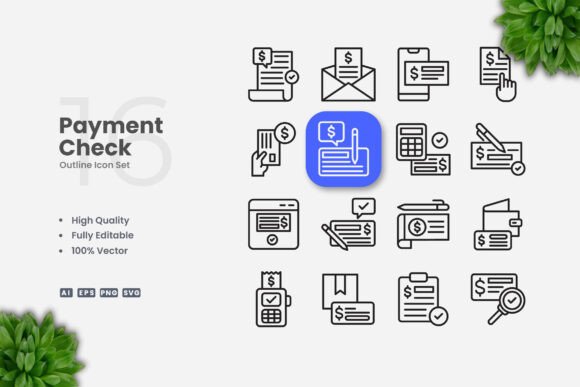
At their core, Payment Check Outline Icons are vector-based graphics that represent common payment-related actions and concepts. Think of a checkmark inside a circle, a credit card silhouette, a wallet outline, or an arrow indicating a transaction. The "outline" style means the icons are drawn with thin, clear strokes rather than filled shapes. This approach gives them a light, modern appearance that blends well with both minimal and content-rich designs.
The set typically includes a variety of symbols such as payment checkmarks, approval badges, bank notes, coins, and secure padlocks. Because they are vectors, each icon is resolution-independent. You can scale them up for a billboard or shrink them down for a mobile app icon without losing quality. The files come in formats like AI, EPS, SVG, and PNG, so you can use them in almost any design software or platform.
Why Choose an Outline Style for Payment Graphics?
Outline icons have become increasingly popular in modern interface and print design. Their simplicity helps reduce visual noise, which is especially important when you are conveying financial information. A clean checkmark outline immediately signals success or approval without distracting from the main content. Similarly, a payment card outline quickly informs the user about payment options without overwhelming them with details.
For beginners and casual users, outline icons are also easier to customize. Because they consist of strokes rather than complex filled paths, you can adjust the stroke weight, change the color, or resize them in vector software like Adobe Illustrator or CorelDRAW with just a few clicks. This flexibility means you do not need to be a professional designer to make them work for your project.
Practical Benefits That Matter for Your Projects
One of the main reasons creators and business owners gravitate toward Payment Check Outline Icons is their adaptability. Here are some of the practical benefits you can expect:
- High Quality and Scalability: Every icon is created at a professional level. The vector format ensures they look crisp on any screen or printed material.
- Full Customization: You can adjust the stroke weight, change colors to match your brand palette, or resize them without distortion. This is particularly useful when you want a consistent look across different media.
- Easy Drag and Drop: The files are organized for quick use. Whether you are working on a website template or a social media post, you can simply drag the icon into your document and start editing.
- Multiple File Formats: The set includes source files (AI, EPS 10), SVG for web use, and PNG with transparency. This variety means you are covered whether you are designing for print, digital, or both.
- Editable Strokes: Unlike some pre-made graphics that lock you into a fixed style, these icons let you modify the stroke thickness. Thinner strokes work well for elegant, modern interfaces, while thicker strokes can make the icons stand out on posters or banners.
Who Can Benefit from Payment Check Outline Icons?
These icons are designed for a broad audience. Entrepreneurs creating a landing page for their online store can use them to highlight secure payment options. Freelancers and bloggers may add them to infographics or blog posts about personal finance. Educators developing course materials on budgeting or transactions can incorporate them into worksheets or slide decks. Small business owners preparing flyers or social media ads can quickly drop an icon into a design to add visual clarity.
Even if you are a hobbyist working on a personal project like a family budget tracker or a donation page for a local event, these icons offer a professional finish without requiring advanced design skills. The outline style is especially forgiving when you are experimenting with different color schemes or layouts.
Where and How to Use Payment Check Outline Icons
The versatility of these icons means you can apply them in numerous contexts. Below are some realistic use cases that show how they fit into everyday work.
Websites and Mobile Apps
In web and app design, Payment Check Outline Icons serve as intuitive visual cues. You can use a checkmark outline next to a "Payment Successful" message, a credit card icon on a payment method selection screen, or a lock icon near a secure checkout area. Because the icons are clean and simple, they do not compete with other interface elements like buttons or forms. They also load quickly as SVG files, which helps with page speed and user experience.
Books and Educational Materials
If you are creating a finance guide, a textbook on economics, or a workbook for students, outline icons can break up text and make concepts easier to grasp. For instance, a small checkmark icon next to a list of completed budget goals or a wallet icon beside a section on saving money adds a visual anchor that helps readers remember information.
Social Media and Infographics
Social media posts that explain payment processes often benefit from clear icons. You might create a carousel post about "How to Verify Your Payment" or an infographic comparing different payment methods. The outline style looks modern and professional on platforms like Instagram, LinkedIn, or Pinterest. Since you can change the color, you can match the icons to your brand colors or the theme of the post.
Flyers, Banners, and Posters
For print materials, vector icons are essential. A flyer promoting a new online store could feature a credit card outline and a checkmark to highlight secure transactions. A banner for a financial workshop might use a stack of coins or a payment check outline to draw attention. Because the icons are scalable, you can print them at any size without pixelation.
Branding and Commercial Projects
If you are developing a brand identity for a fintech startup or a small business, these icons can become part of your visual language. Use them in presentations, on invoices, or as part of your website header. The consistency of an outline style helps build a cohesive look across all touchpoints.
Important Considerations Before You Start
While Payment Check Outline Icons are highly versatile, there are a few things to keep in mind to get the most out of them:
- Software Compatibility: To edit the stroke weight, color, or size, you will need vector editing software like Adobe Illustrator or CorelDRAW. If you are new to these tools, there is a small learning curve, but many tutorials are available online. The PNG files work for basic use without editing.
- Stroke Weight Adjustments: When you change the stroke weight, consider how the icon will appear at different scales. A thicker stroke that looks good on a poster might feel too heavy on a mobile screen. Test your icons at the intended size before finalizing.
- Color Choices: Outline icons often look best with a single color or a very limited palette. Brighter colors can make them pop on social media, while darker tones may suit formal business documents.
- Consistency Across Sets: If you are using multiple icons from the same set, they will share a consistent style. However, if you mix them with icons from other sources, the difference in stroke weight or design language might be noticeable. Stick with one set for a unified appearance.
- File Organization: The downloaded package includes a readme.txt file with instructions. Take a moment to read it, as it often contains useful tips about folder structure and how to access the different formats.
Practical Tips for Getting Started
If you are new to using vector icons, here is a simple workflow to try:
- Open the icon file in your preferred vector software. For most users, Adobe Illustrator or CorelDRAW will work well.
- Select the icon you need and drag it into your project.
- Adjust the stroke weight using the stroke panel. Start with a weight around 2–3 pixels for digital use, or 1–2 points for print.
- Change the color by selecting the stroke and picking a new color swatch.
- Scale the icon to your desired size. Because it is a vector, you can make it as large or small as you need.
- Export the final file in the format required for your project. For web use, SVG or PNG are common. For print, EPS or AI are preferred.
This process takes only a few minutes once you are familiar with the tools. The ease of customization is one of the reasons why so many designers and non-designers alike appreciate outline icon sets.
Final Thoughts on Payment Check Outline Icons
Payment Check Outline Icons offer a practical and visually appealing solution for anyone who needs to represent payment concepts clearly. Their clean design fits naturally into websites, mobile apps, books, social media, infographics, flyers, banners, posters, and many other formats. Because they are 100% vector and fully customizable, you can adapt them to your specific needs without starting from scratch.
Whether you are a seasoned professional or someone just beginning to explore design, these icons can save you time and improve the quality of your projects. The ability to resize, change color, and edit stroke weight in software like Adobe Illustrator or CorelDRAW makes them a flexible choice for both digital and print work. With multiple file formats included, you have everything you need to get started right away.
Take a moment to explore what the set offers. A simple checkmark icon might be all you need to add a polished, trustworthy feel to your next project. Happy designing, and enjoy the creative process.